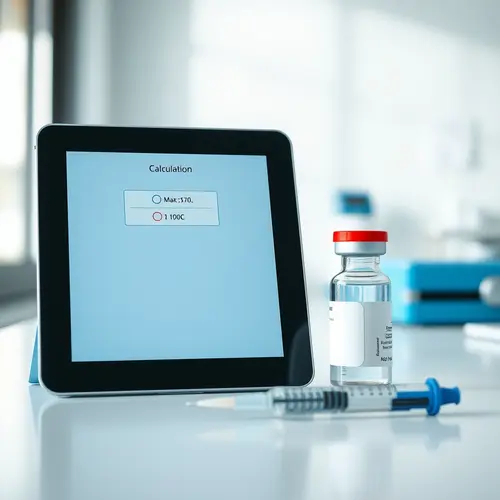
Medication calculation formula mastery starts in the high-stakes world of healthcare, where precision isn’t just a virtue—it’s a mandate. One decimal point can mean the difference between healing and harm. One misstep in dosage can turn a life-saving treatment into a perilous gamble. That’s why understanding the Medication Calculation Formula isn’t optional—it’s indispensable.
Picture this: a bustling ER, an anxious patient, and a nurse preparing an IV infusion under intense pressure. In that moment, there’s no room for hesitation. No luxury of trial and error. Only clarity, speed, and mastery of these methods. That’s the lifeline. The silent partner that guards patient safety and fuels the health professional’s confidence with every drop administered.
But here’s the sobering truth—many professionals still grapple with the nuances of dosage calculations. Some rely on memory, others on smartphone apps, and some, unfortunately, still guess. Yet the secret isn’t in cramming equations or blindly trusting technology. The secret lies in mastering the Medication Calculation Formula so thoroughly that it becomes second nature. An intuitive skill. A sixth sense.
And that’s where this journey begins.
The Silent Crisis in Clinical Competence
Despite rigorous training, an alarming number of medical errors stem from incorrect dosing. According to global health safety studies, medication errors harm millions of patients each year—and a sizable fraction of these can be traced to errors in calculation. Not from lack of compassion, not from lack of intent, but from a fragmented understanding of the Medication Calculation Formula.
Let’s strip it down: At its core, the Medication Calculation Formula is the framework used to convert a prescription order into a precise, measurable administration. Whether it’s oral, intravenous, subcutaneous, or intramuscular, the math behind dosing remains unforgivingly consistent. No shortcuts. No wiggle room. Just exactitude.
And yet, many formulas are misunderstood or half-remembered. Confusion between units—milligrams, micrograms, milliliters. Misreading of ratios and dilutions. Lack of familiarity with drip rates or reconstitution volumes. The consequences? Delayed care. Patient harm. Legal liability. Professional burnout.
This doesn’t have to be your story.
When Confidence Meets Competence
Let’s imagine what happens when dosing math is not a foggy memory from nursing school but a fluent language you speak daily. The benefits go far beyond numbers:
You dose faster—no hesitation, no second-guessing.
You communicate clearly—with physicians, with colleagues, with patients.
You lead fearlessly—guiding others through emergency calculations under pressure.
You feel empowered—because you’re no longer intimidated by the math.
This isn’t just technical knowledge. This is clinical power. And it begins with a single step—uncovering the secrets behind the Medication Calculation Formula that most were never taught properly.
The Medication Calculation Formula Behind Every Dose
Here’s the foundational Medication Calculation Formula in plain English:
D (Desired Dose) ÷ H (Have on Hand) × Q (Quantity) = Amount to Administer
Let’s break it down:
D (Desired Dose): The exact dose the prescriber has ordered for the patient.
H (Have): The amount available on hand, usually listed on the medication label.
Q (Quantity): The form in which the medication is available (e.g., per tablet, per mL, per vial).
It looks simple—but don’t let its elegance deceive you. When scaled across patient weight, varying concentrations, infusion rates, or pediatric dosing, the Medication Calculation Formula evolves into a toolkit of specialized sub-formulas—each with their own tricks, shortcuts, and potential pitfalls.
Are you confident with weight-based dosing? Infusion by body surface area (BSA)? Insulin drip titrations? Emergency epinephrine calculations? These all rely on precise adaptations of these methods.
Mastery here is what sets apart the good from the exceptional. The hesitant from the assured. The safe from the unsafe.
Why Now Is the Time to Reclaim Your Mastery
Medical environments today are faster, more complex, and less forgiving. Automation is rising, but human judgment still reigns supreme when seconds count. That’s why now—more than ever—mastery of dosing math is a professional imperative.
This is not just about acing a test or impressing a supervisor. It’s about standing tall in the face of complexity. About administering care with full awareness, clarity, and confidence. About eliminating the “what ifs” and embracing absolute control over your clinical decisions.
Medication Calculation Formula: Empowerment Through Precision
Here’s the truth: You already have the heart. The compassion. The calling. What you need now is the toolkit. And it starts with a deep, working knowledge of the Medication Calculation Formula.
In the coming sections, you’ll dive into the most common, misunderstood, and high-risk calculations—from titration tables to pediatric microdosing to IV drip rate mastery. Not just the “what,” but the “why” and “how.” With examples. With clarity. With compassion.
Because this isn’t just about math. This is about patients. This is about confidence. This is about you being the most capable version of yourself when it matters most.
So stay with this. Own the formulas. Trust the logic. Master the craft.
These secrets are no longer secrets—they’re your foundation for confident dosing, every time.
A Practice Drill That Works
Train with ten mixed problems daily. Cover tablets, liquids, weight-based doses, and drip rates with a timer running. Check each answer against unit labels, log repeat mistakes, and review weak types every weekend until speed feels natural.
Double-Check Culture on the Ward
Make verification normal, not awkward. Read orders aloud, confirm decimal points twice, and invite a second pair of eyes for high-risk products. For advanced drills, see our calculate dosage guide for healthcare professionals. Record near misses openly so the whole team learns from each catch.
How can nurses master medication calculation formula skills?
Practice mixed problems daily across tablets, liquids, weight-based doses, and drips. Check units every time, log repeat errors, and review weak spots weekly with a mentor.
What checks prevent dosing math errors on the ward?
Read orders aloud, confirm decimals twice, and get a second check for high-risk products. Track near misses openly so the team learns from each catch.
Where is trusted dosing calculation guidance found?
Begin with CDC medication-safety resources and current drug references. Unit educators plus pharmacy review add practical checks for daily clinical work.