Dosage Rate
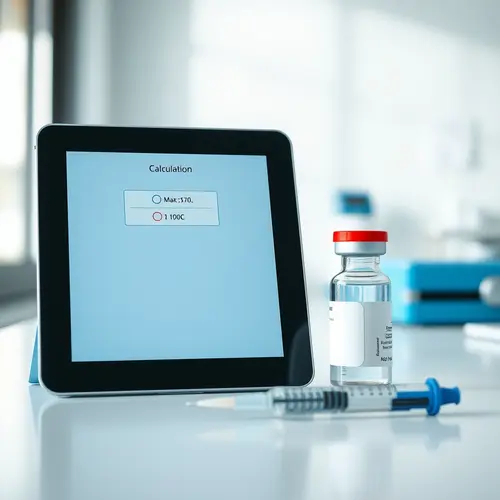
A Dosage Rate represents the speed at which a medication is administered to a patient over a specific time period, typically measured in units such as milliliters per hour (mL/hr) or micrograms per kilogram per minute (mcg/kg/min).
Understanding proper Dosage Rate calculation is fundamental to patient safety, as errors in administration speed can lead to underdosing, toxic effects, or therapeutic failure. Healthcare professionals must master these calculations to ensure medications reach therapeutic levels without causing adverse reactions.
Understanding Dosage Rate Fundamentals
The concept of Dosage Rate extends beyond simple arithmetic. It encompasses the relationship between drug concentration, patient weight, desired therapeutic effect, and time-based delivery mechanisms.
According to guidelines from the Institute for Safe Medication Practices (ISMP), calculation errors represent one of the most preventable causes of medication-related harm. The majority of these errors stem from misunderstanding unit conversions or flow rate determinations.
Three primary factors determine accurate Dosage Rate calculations: the total dose prescribed by the physician, the concentration of the medication solution, and the time frame over which the medication should be delivered. Each variable must be verified independently before calculating the final administration rate.
Core Components of Dosage Rate Calculation
Every Dosage Rate calculation requires specific information inputs. The ordered dose (prescribed amount), drug concentration (strength of solution), and patient-specific parameters (weight, body surface area) form the foundation.
Weight-based calculations demand extra precision. A small calculation error multiplied across body weight can result in significant dosing discrepancies, particularly in pediatric or critical care settings.
The formula foundation remains consistent: Dosage Rate (mL/hr) = (Dose ordered × Patient weight × 60 minutes) ÷ (Concentration × 1000 mcg/mg). This standardized approach minimizes room for error when converted properly across measurement systems.
The Seven Critical Calculation Methods
1. Basic Intravenous Flow Rate Calculation
The fundamental IV flow rate determines how many milliliters per hour must infuse to deliver the prescribed dose. This calculation forms the basis for all infusion pump programming.
Formula: Flow Rate (mL/hr) = Total Volume (mL) ÷ Time (hours). For a 1000 mL bag to infuse over 8 hours: 1000 ÷ 8 = 125 mL/hr.
2. Weight-Based Continuous Infusion
Critical care medications frequently require weight-based dosing expressed in mcg/kg/min. This method ensures therapeutic levels scale appropriately to patient size.
For a 70 kg patient receiving dopamine at 5 mcg/kg/min from a 400 mg/250 mL solution: Rate = (5 × 70 × 60 × 250) ÷ (400 × 1000) = 13.125 mL/hr.
3. Milligrams Per Hour Conversion
Some medications prescribe mg/hr rather than weight-based rates. Converting concentration to flow rate requires attention to solution strength.
Example: Administer 50 mg/hr from a 2 g/500 mL solution. First convert: 2 g = 2000 mg. Then calculate: (50 mg/hr × 500 mL) ÷ 2000 mg = 12.5 mL/hr.
4. Titration Calculations
Medications requiring dose adjustments based on patient response need titration formulas. Each increment change must translate to precise flow rate modifications.
When increasing a drip by 2 mcg/kg/min, recalculate the entire flow rate rather than estimating adjustments to prevent compounding errors.
5. Body Surface Area (BSA) Dosing
Chemotherapy agents and certain high-risk medications utilize BSA calculations. The Mosteller formula (√[Height(cm) × Weight(kg) ÷ 3600]) determines BSA in square meters.
A medication dosed at 500 mg/m²/day for a patient with 1.8 m² BSA requires: 500 × 1.8 = 900 mg total daily dose.
6. Units Per Hour for Heparin and Insulin
Anticoagulants and insulin infusions measure in units rather than mass. A 25,000 units/500 mL heparin bag delivering 1000 units/hr requires: (1000 × 500) ÷ 25,000 = 20 mL/hr.
7. Pediatric Drop Factor Calculations
When infusion pumps are unavailable, manual drop counting becomes necessary. Drop factor (drops/mL) varies by IV tubing type: macrodrip (10, 15, or 20 drops/mL) or microdrip (60 drops/mL).
Formula: Drops per minute = (mL/hr × Drop factor) ÷ 60. For 100 mL/hr with 15 drops/mL tubing: (100 × 15) ÷ 60 = 25 drops/min.
Common Units and Conversion Mastery
| Measurement Type | Common Units | Conversion Factor |
|---|---|---|
| Mass | g, mg, mcg | 1 g = 1000 mg = 1,000,000 mcg |
| Volume | L, mL | 1 L = 1000 mL |
| Time | hr, min, sec | 1 hr = 60 min = 3600 sec |
| Concentration | mg/mL, %, ratio | 1% = 10 mg/mL = 1:100 |
| Weight-based Rate | mcg/kg/min | Multiply by weight and time |
Safety Protocols and Double-Check Systems
The FDA mandates independent double-checks for high-alert medications. Two clinicians must separately calculate the Dosage Rate and verify pump settings before administration begins.
Smart infusion pumps with drug libraries provide guardrails against calculation errors. These systems alert clinicians when programmed rates fall outside established safe ranges for specific medications.
However, technology cannot replace clinical judgment. Nurses must assess whether calculated rates make physiological sense given the patient’s condition, the medication’s pharmacokinetics, and expected therapeutic response.
Expert Opinion: The Most Dangerous Calculation Mistake
After analyzing medication error reports, the most critical mistake involves decimal point misplacement during unit conversion. A tenfold error can rapidly prove fatal with narrow therapeutic index drugs.
The outdated practice of “trailing zeros” (writing 5.0 mg instead of 5 mg) continues causing errors despite Joint Commission warnings. Leading zeros (0.5 mg rather than .5 mg) prevent misreading but remain underutilized.
Contrary to popular belief, experienced clinicians make calculation errors at nearly the same rate as novices. Fatigue, interruptions, and overconfidence contribute more than inexperience. Mandatory calculation tools and forcing functions prove more effective than experience alone.
Practical Troubleshooting Scenario
Consider this scenario: A patient receiving norepinephrine at 8 mcg/min suddenly develops hypotension requiring rate increase to 12 mcg/min. The solution concentration is 4 mg/250 mL, and the current pump shows 30 mL/hr.
Problem identification: The existing rate doesn’t match the ordered dose. At 30 mL/hr from 4 mg/250 mL, the patient receives: (30 × 4 × 1000) ÷ (250 × 60) = 8 mcg/min. This confirms pump accuracy.
New calculation: For 12 mcg/min: Rate = (12 × 1 × 60 × 250) ÷ (4 × 1000) = 45 mL/hr. The pump must be increased by 15 mL/hr to achieve the new therapeutic target.
Integration with Clinical Practice
Mastering Dosage Rate calculations extends beyond mathematical proficiency. Clinicians must integrate pharmacokinetic principles, understanding how loading doses differ from maintenance rates and why certain medications require titration protocols.
The therapeutic range concept guides rate adjustments. Medications with narrow therapeutic windows (digoxin, theophylline, vancomycin) demand precise rate control to maintain serum levels between minimum effective concentration and toxic threshold.
Documentation standards require recording both the ordered dose and calculated rate. This dual documentation enables error detection during chart review and facilitates communication during shift handoffs.
Advanced Considerations for Complex Cases
Organ dysfunction alters drug clearance, necessitating rate modifications. Renal impairment slows elimination of renally-cleared medications, requiring reduced Dosage Rate to prevent accumulation. Hepatic dysfunction similarly affects medications metabolized by the liver.
Pediatric calculations demand heightened vigilance. The same absolute dose produces vastly different serum levels in a 5 kg neonate versus a 50 kg adolescent, making weight-based calculations non-negotiable for this population.
Bariatric patients present unique challenges. Some medications dose on actual body weight, others on ideal body weight, and some on adjusted body weight. Pharmacists serve as essential resources for determining the appropriate weight parameter.
Key Takeaways for Clinical Excellence
- Always verify all calculation components independently before programming infusion devices
- Use standardized calculation formulas consistently across all patient care settings
- Implement mandatory double-checks for high-alert medications without exception
- Question any calculated rate that seems physiologically implausible before administration
- Maintain proficiency through regular calculation practice and competency verification
- Leverage technology appropriately while retaining strong foundational calculation skills
- Understand the “why” behind calculations to recognize when formulas need modification
Accurate Dosage Rate determination represents a fundamental nursing and medical competency that directly impacts patient outcomes. While electronic health records and smart pumps provide calculation assistance, clinicians bear ultimate responsibility for verifying accuracy before medication administration.
Combining solid mathematical foundations with clinical reasoning, systematic double-checks, and healthy skepticism creates the robust safety net patients deserve. Mastery of these seven calculation methods, paired with understanding their clinical applications, transforms Dosage Rate determination from a source of anxiety into a confident, routine aspect of expert practice.