medication instructions
Understanding medication instructions can mean the difference between healing and harm. Every prescription label, patient information leaflet, and pharmacist consultation contains vital guidance that directly impacts treatment effectiveness and safety. Misinterpreting dosage timing, ignoring food interactions, or skipping warnings leads to preventable complications affecting millions of patients annually.
The Food and Drug Administration requires pharmaceutical manufacturers to provide clear labeling standards. Despite these regulations, patient adherence remains challenging. Complexity in medical terminology, abbreviated directions, and varying formats across pharmacies create barriers to proper medication use.
Why Medication Instructions Matter Beyond the Label
Prescription directions serve as your personalized treatment roadmap. They account for your specific condition, body weight, organ function, and potential drug interactions. Generic advice found online cannot replace these tailored protocols.
Healthcare providers design dosing schedules based on pharmacokinetic principles. These determine how your body absorbs, distributes, metabolizes, and eliminates each compound. Deviation from prescribed timing disrupts therapeutic blood levels, reducing efficacy or increasing toxicity risk.
Decoding Common Medication Instructions Terminology
Prescription labels use standardized abbreviations derived from Latin medical terms. “BID” means twice daily, while “QID” indicates four times per day. “PRN” signals as-needed use, requiring your judgment about symptom severity.
| Abbreviation | Meaning | Practical Application |
|---|---|---|
| QD/Daily | Once per day | Take at same time daily for consistency |
| BID | Twice daily | Space doses 12 hours apart |
| TID | Three times daily | Divide waking hours into thirds |
| AC | Before meals | Take 30-60 minutes before eating |
| PC | After meals | Take within 30 minutes of finishing meal |
The Seven Critical Errors in Following Medication Instructions
1. Confusing “With Food” and “On Empty Stomach”
Food interactions significantly alter drug absorption. Levothyroxine requires an empty stomach because food binds to the molecule, reducing bioavailability by up to 40%. Conversely, ibuprofen with food protects gastric lining from irritation.
Grapefruit juice deserves special mention. This citrus inhibits CYP3A4 enzymes responsible for metabolizing statins, calcium channel blockers, and immunosuppressants. The result: dangerously elevated drug concentrations persisting for 24 hours after a single glass.
2. Misunderstanding “As Needed” Directives
PRN instructions require clinical judgment many patients lack. Pain medication labeled “every 4-6 hours as needed” does not mean waiting until agony becomes unbearable. Effective pain management involves staying ahead of symptoms, particularly after surgery or during chronic conditions.
The Centers for Disease Control and Prevention guidelines emphasize lowest effective doses. Document your usage patterns to identify triggers and optimize timing with your healthcare provider.
3. Splitting or Crushing Without Confirmation
Extended-release formulations use specialized coatings or matrix systems to control drug delivery over 12-24 hours. Crushing these tablets dumps the entire dose immediately, causing toxicity and eliminating sustained therapeutic effect.
Enteric-coated medications protect acid-sensitive compounds or shield stomach tissue from irritants. Breaking this barrier defeats the pharmaceutical engineering. Always verify with your pharmacist before altering tablet form.
4. Ignoring Storage Requirements in Medication Instructions
Temperature, humidity, and light exposure degrade active pharmaceutical ingredients. Bathroom medicine cabinets create the worst possible environment despite cultural tradition. Steam and heat fluctuations accelerate decomposition.
Refrigeration requirements are equally critical. Insulin loses potency when frozen or exposed to temperatures above 86°F. Biologic medications like injectable immunosuppressants require consistent cold chain maintenance from manufacturing through home administration.
5. Stopping Antibiotics Early
Bacterial resistance develops when antibiotic courses end prematurely. Feeling better after three days does not mean infection eradication. Surviving bacteria multiply, potentially developing resistance mechanisms that render entire drug classes ineffective.
The World Health Organization identifies antimicrobial resistance as a top global health threat. Completing prescribed courses exactly as directed protects both individual and public health.
6. Mixing Medications Without Professional Guidance
Polypharmacy creates complex interaction potential. Over-the-counter supplements, herbal remedies, and vitamins are drugs requiring the same scrutiny as prescriptions. St. John’s Wort induces liver enzymes that metabolize birth control pills, antidepressants, and blood thinners.
Maintain a comprehensive medication list including dosages, frequencies, and purposes. Share this document with every healthcare provider and pharmacist to enable interaction screening.
7. Disregarding Timing Specificity
Cardiovascular medications demonstrate time-dependent efficacy. Blood pressure typically peaks in early morning hours. Taking antihypertensives at bedtime provides maximum protection during this vulnerable period, reducing heart attack and stroke risk according to chronotherapy research.
Thyroid medication absorption requires a four-hour buffer from calcium, iron, and certain foods. Morning administration on waking optimizes this requirement before daily nutrition begins.
Expert Opinion: The Outdated “Take Until Gone” Myth
Healthcare education traditionally emphasized finishing all prescribed medication. This blanket advice requires nuance. While completing antibiotic courses remains critical, other medication classes benefit from reassessment.
Proton pump inhibitors for acid reflux were designed for short-term use, yet patients continue indefinitely without reevaluation. Long-term use increases fracture risk, kidney disease, and nutrient malabsorption. Challenge assumptions about indefinite continuation. Schedule regular medication reviews with your provider to discontinue unnecessary drugs.
Practical Troubleshooting Scenario
Consider a patient prescribed atorvastatin 40mg daily for cholesterol management. Label directions state “take at bedtime.” After two weeks, she experiences muscle aches and stops the medication without consultation.
The correct approach involves immediate provider contact. Myalgia affects 10-15% of statin users. Timing adjustment, dosage reduction, or alternative statin selection often resolves symptoms while maintaining cardiovascular protection. Abrupt discontinuation eliminates therapeutic benefit and wastes the adaptation period already completed.
Building a Personal Medication Instructions System
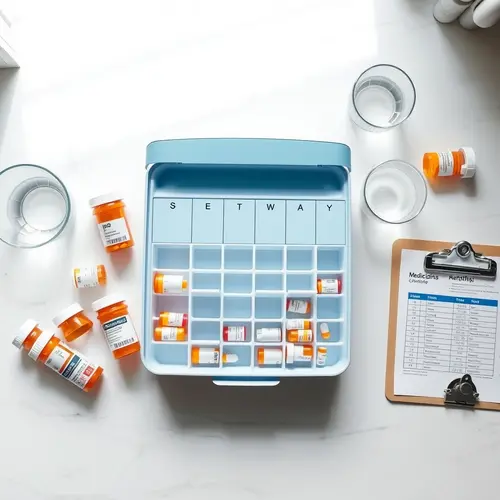
Adherence improves dramatically with structured routines. Link medication timing to existing habits like morning coffee or tooth brushing. Pill organizers eliminate daily decision-making about which medications you have already taken.
Smartphone applications provide reminders, track refills, and document side effects. However, technology cannot replace fundamental understanding. Read patient information sheets completely before first dose. Highlight sections relevant to your specific circumstances.
Questions to Ask Your Pharmacist About Medication Instructions
- What specific symptom or lab value will indicate this medication is working?
- Which side effects require immediate medical attention versus routine monitoring?
- Does this medication interact with my current prescriptions or supplements?
- What should I do if I miss a dose at the scheduled time?
- Can this medication be safely stopped abruptly, or does it require gradual tapering?
- Are there specific foods, beverages, or activities to avoid while taking this drug?
- How should I store this medication to maintain potency?
- What is the difference between generic and brand versions for this specific compound?
The Financial Impact of Proper Adherence
Medication non-adherence costs the healthcare system over $100 billion annually through preventable hospitalizations and complications. Individual patients face this burden through emergency visits, disease progression, and additional prescriptions addressing preventable problems.
Understanding and following medication instructions precisely represents the most cost-effective healthcare intervention available. The prescription you already obtained delivers maximum value only when used correctly.
Special Populations Requiring Modified Medication Instructions
Pediatric dosing calculations account for body weight and developmental stage. Never assume adult instructions apply to children. Liquid formulations require accurate measuring devices, not kitchen spoons varying by 300% in volume.
Geriatric patients face altered pharmacokinetics due to reduced kidney function, decreased liver metabolism, and changed body composition. The American Geriatrics Society maintains a Beers Criteria list identifying medications posing heightened risks for older adults. Dose adjustments often become necessary as renal function declines.
Pregnancy and lactation create unique considerations. Teratogenic risks vary by trimester, and many drugs transfer into breast milk. The safest course involves specialist consultation before conception when possible, allowing medication optimization before fetal exposure begins.
When to Seek Clarification on Medication Instructions
Ambiguous directions warrant immediate clarification. “Take as directed” without specifics provides no actionable guidance. Contact the prescribing office for explicit instructions including exact timing, quantity, and duration.
Prescription errors occur despite multiple safety checks. If directions seem unusual compared to previous prescriptions for the same medication, verify before consuming. Pharmacists catch many prescribing mistakes, but patient vigilance adds another safety layer.
Mastering medication instructions transforms passive pill-taking into active health management. Your prescriptions represent concentrated medical knowledge tailored to your unique physiology and condition. Respect this precision by executing the prescribed regimen with equal exactness. The difference between therapeutic success and preventable complications often rests in these details.